
Sleepwalking (Somnambulism) and Hypnotherapy: Understanding Causes, Symptoms, and Treatment Options
Sleepwalking is more than simply walking during sleep—it can significantly impact safety and quality of life. This article explores its causes, symptoms, medical treatments, and the supportive role hypnotherapy may play in promoting healthier sleep habits. description.
Milind Sable
7/17/20264 min read
Sleepwalking (Somnambulism): Causes, Symptoms, and How Hypnotherapy May Support Better Sleep
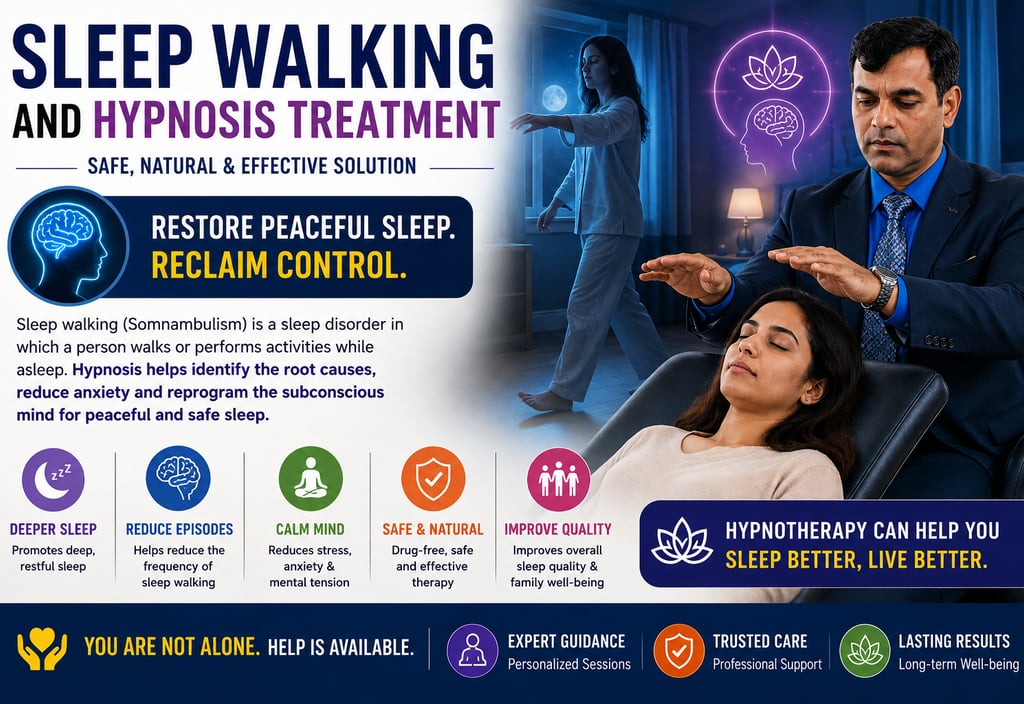
Sleepwalking, medically known as Somnambulism, is a sleep disorder in which a person gets out of bed and performs activities while still asleep. These activities may include walking, sitting up, opening doors, talking, eating, or even leaving the house—without being aware of their actions.
Although sleepwalking is more common in children, it can also affect teenagers and adults. In adults, frequent sleepwalking episodes may sometimes be associated with stress, sleep deprivation, certain medications, or other sleep disorders.
The good news is that many cases can be effectively managed through proper diagnosis, healthy sleep habits, and appropriate professional treatment. In some situations, hypnotherapy may be used as a complementary approach to improve relaxation and reduce stress.
What Is Sleepwalking?
Sleepwalking is a parasomnia, a group of sleep disorders involving unusual behaviors during sleep. It usually occurs during deep non-REM sleep, most often within the first few hours after falling asleep.
People who sleepwalk are generally not conscious, may appear confused, and usually have little or no memory of the episode after waking.
Common Symptoms of Sleepwalking
Sleepwalking episodes may include:
Walking around while asleep
Sitting up suddenly in bed
Talking or mumbling during sleep
Opening doors or windows
Rearranging objects
Eating while asleep
Difficulty waking the person
Appearing confused if awakened
No memory of the event the next morning
Some episodes last only a few minutes, while others may continue for 20–30 minutes or longer.
What Causes Sleepwalking?
Sleepwalking does not have a single cause. Several factors may contribute, including:
Sleep Deprivation
Lack of sufficient sleep increases the likelihood of sleepwalking episodes.
Stress and Anxiety
Emotional stress and anxiety can disrupt normal sleep patterns and may trigger episodes in some individuals.
Family History
Sleepwalking tends to run in families, suggesting a genetic component.
Fever
Children experiencing fever may occasionally sleepwalk.
Certain Medications
Some medications that affect sleep may increase the risk in susceptible individuals.
Other Sleep Disorders
Conditions such as obstructive sleep apnea or restless legs syndrome may contribute to disturbed sleep and sleepwalking.
Is Sleepwalking Dangerous?
Most sleepwalking episodes are harmless, but injuries can occur if the person:
Falls down stairs
Walks outside the house
Uses sharp objects
Drives a vehicle (rare)
Bumps into furniture
Safety precautions are important for individuals who experience frequent episodes.
How Is Sleepwalking Diagnosed?
A healthcare provider may recommend:
Medical history evaluation
Sleep history
Physical examination
Sleep diary
Overnight sleep study (Polysomnography) if needed
Proper evaluation helps identify any underlying sleep disorders or medical conditions.
Treatment Options for Sleepwalking
Treatment depends on the cause and severity of symptoms.
It may include:
Improving sleep habits
Managing stress
Treating underlying sleep disorders
Medication in selected cases
Behavioral therapy
Safety measures at home
Can Hypnotherapy Help with Sleepwalking?
Hypnotherapy is not considered a standard primary treatment for sleepwalking, and it should not replace medical evaluation or evidence-based treatment when needed.
However, some individuals may benefit from hypnotherapy as a complementary approach, particularly when stress, anxiety, or poor sleep quality contribute to their symptoms.
A qualified hypnotherapist may use relaxation techniques, guided imagery, and positive therapeutic suggestions to promote healthy sleep habits and emotional well-being.
Potential Benefits of Hypnotherapy
Depending on the individual's needs, hypnotherapy may help support:
Deep Relaxation
Relaxation techniques may reduce stress and promote a calmer mind before sleep.
Better Sleep Quality
Improved sleep hygiene combined with hypnosis-based relaxation may encourage healthier sleep patterns.
Stress Management
Reducing emotional stress may help decrease sleep disturbances for some individuals.
Building Healthy Sleep Habits
Therapeutic suggestions may reinforce consistent bedtime routines and positive sleep behaviors.
Emotional Well-Being
Hypnotherapy may help individuals manage anxiety and improve overall emotional balance.
What Happens During a Hypnotherapy Session?
A professional hypnotherapy session generally includes:
Initial Assessment
The therapist discusses your sleep history, concerns, and goals.
Guided Relaxation
You are guided into a calm and focused state of relaxation.
Therapeutic Suggestions
The therapist uses personalized, evidence-informed suggestions and visualization techniques to support relaxation and healthy sleep routines.
Follow-Up
Recommendations may include relaxation exercises and lifestyle strategies to complement treatment.
Safety Tips for Families
If someone in your family sleepwalks:
Keep doors and windows securely locked.
Remove sharp or dangerous objects from the bedroom.
Use safety gates if stairs are present.
Avoid waking the person suddenly unless necessary for safety.
Gently guide them back to bed if possible.
Ensure they maintain a regular sleep schedule.
Healthy Habits to Reduce Sleepwalking Episodes
Simple lifestyle changes may help improve sleep quality:
Maintain a consistent bedtime.
Get adequate sleep every night.
Limit caffeine before bedtime.
Reduce evening screen time.
Practice relaxation techniques.
Exercise regularly.
Manage daily stress effectively.
When Should You Consult a Professional?
Seek professional evaluation if:
Sleepwalking occurs frequently.
Episodes result in injury.
The person leaves the house while asleep.
Symptoms begin during adulthood.
Sleepwalking affects daily life or family safety.
A healthcare professional can determine whether additional testing or treatment is needed.
Frequently Asked Questions (FAQs)
Q1. What is sleepwalking?
Sleepwalking, or somnambulism, is a sleep disorder in which a person performs activities such as walking or talking while still asleep.
Q2. Is sleepwalking dangerous?
It can be. While many episodes are harmless, there is a risk of injury if the individual falls, leaves the house, or encounters hazardous situations.
Q3. Can adults experience sleepwalking?
Yes. Although it is more common in children, adults can also experience sleepwalking, particularly when underlying sleep disorders, stress, or certain medications are involved.
Q4. Can hypnotherapy cure sleepwalking?
There is no strong scientific evidence that hypnotherapy cures sleepwalking. However, some people may find it helpful as a complementary therapy for relaxation, stress reduction, and improving sleep quality when used alongside appropriate medical care.
Q5. Is hypnosis safe?
When conducted by a qualified and experienced hypnotherapist, hypnosis is generally considered safe for most individuals.
Q6. How many hypnotherapy sessions are needed?
The number of sessions varies depending on the individual's symptoms, goals, and overall treatment plan.
Q7. Can stress trigger sleepwalking?
Yes. Stress, anxiety, sleep deprivation, and irregular sleep schedules are recognized factors that may increase the likelihood of sleepwalking episodes in some individuals.
Q8. When should I seek medical help for sleepwalking?
Consult a healthcare professional if sleepwalking is frequent, causes injury, disrupts daily life, or begins for the first time in adulthood.
Final Thoughts
Sleepwalking can be concerning for both individuals and their families, but it is often manageable with the right approach. A thorough medical evaluation, healthy sleep habits, and appropriate treatment form the foundation of effective care.
For some individuals, hypnotherapy may serve as a complementary tool to promote relaxation, reduce stress, and support healthier sleep patterns. It should always be considered as part of a comprehensive treatment plan rather than a replacement for medical care.
About the Author
Milind Sable is a professional Hypnotherapist, NLP Trainer, AI Trainer, Mentalist, Motivational Speaker, and Author with over 30 years of experience in personal development and mind training. Through books, workshops, and professional programs, he helps individuals improve confidence, manage stress, enhance emotional well-being, and develop healthier lifestyle habits.
Improve Your Sleep, Improve Your Life
At Milind Sable Academy, we provide educational resources, hypnotherapy services, and professional training programs designed to support emotional wellness, stress management, and personal growth.
📚 Explore Our Books
🎓 Join Our Professional Courses
📅 Book a Consultation
📩 Subscribe for Mind Wellness Tips
Milind Sable Academy
Clinical mental mechanics and professional hypnotherapy blueprints.
Home-Shop-Results-Contact
Inquiries
info@milindsable.com
Based in Ch. Sambhajinagar, India
Global digital delivery
© 2026 Milind Sable Academy-Professional certification and mental performance blueprints.
Mental mechanics, not mysticism