
Mobile Addiction -Hypnotherapy Treatment
Mobile addiction refers to persistent, excessive smartphone use that interferes with daily life. It may affect work, studies, relationships, sleep, or emotional well-being.
Milind Sable
7/17/20265 min read
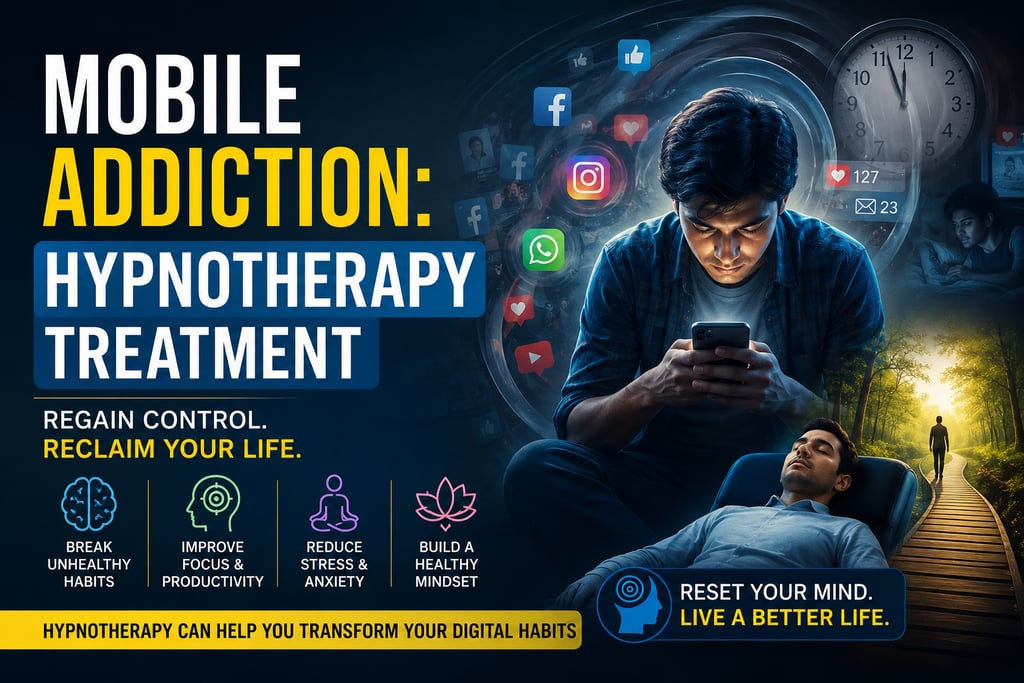
Mobile Addiction: A Modern-Day Challenge
In today's digital world, smartphones have become an essential part of our daily lives. From communication and education to entertainment and work, mobile devices offer countless benefits. However, excessive smartphone use can gradually develop into mobile addiction, affecting mental health, productivity, relationships, and overall well-being.
If you find yourself constantly checking your phone without any real reason, spending hours scrolling through social media, or feeling anxious when your phone isn't nearby, you may be experiencing signs of problematic smartphone use.
The good news is that these habits can be changed. Hypnotherapy is one approach that may help individuals understand and modify unhealthy behavioral patterns as part of a broader behavior change plan.
What Is Mobile Addiction?
Mobile addiction refers to persistent, excessive smartphone use that interferes with daily life. It may affect work, studies, relationships, sleep, or emotional well-being.
While smartphone addiction is not formally recognized as a standalone medical diagnosis in many diagnostic systems, problematic smartphone use is widely studied, and excessive use can contribute to stress and reduced quality of life.
Common Signs of Mobile Addiction
You may be experiencing unhealthy smartphone habits if you:
Check your phone every few minutes.
Feel anxious when the battery is low.
Spend hours on social media without realizing it.
Use your phone late into the night.
Ignore family or friends because of your phone.
Find it difficult to concentrate on work or studies.
Reach for your phone automatically when bored or stressed.
Feel restless when separated from your device.
Why Do People Become Addicted to Mobile Phones?
Several psychological and behavioral factors can contribute to excessive smartphone use:
Instant Rewards
Notifications, likes, and messages provide immediate rewards that encourage repeated checking.
Habit Formation
Repeated phone use can become an automatic habit triggered by boredom, stress, or idle moments.
Fear of Missing Out (FOMO)
Many people feel compelled to stay constantly connected to avoid missing updates or conversations.
Stress Relief
Some individuals use their phones as a way to temporarily escape stress, anxiety, or uncomfortable emotions.
Effects of Mobile Addiction
Excessive smartphone use may contribute to:
Poor concentration
Reduced productivity
Sleep disturbances
Eye strain
Neck and shoulder pain
Increased stress
Relationship conflicts
Reduced physical activity
Difficulty managing time
These effects vary from person to person and may have multiple contributing factors.
How Hypnotherapy May Help
Hypnotherapy is a guided process that uses focused attention and relaxation techniques. Some people find it helpful for changing habits, improving motivation, and strengthening self-control.
Rather than "forcing" change, hypnotherapy aims to support individuals in developing healthier responses and reinforcing positive goals.
Potential areas where hypnotherapy may help include:
Breaking Automatic Habits
Many smartphone behaviors happen without conscious awareness. Hypnotherapy can be used alongside habit-building strategies to increase awareness and encourage intentional phone use.
Reducing Emotional Triggers
If stress, boredom, or anxiety lead to excessive phone use, relaxation-focused hypnosis may help some individuals manage those emotions more effectively.
Strengthening Self-Control
Hypnotherapy often incorporates positive suggestions and visualization exercises that may reinforce motivation to follow healthier digital habits.
Improving Sleep Habits
Reducing late-night screen use is an important part of healthy sleep hygiene. Relaxation exercises used in hypnotherapy may support better bedtime routines.
A Typical Hypnotherapy Program
A structured program may include:
Step 1: Assessment
Understanding your smartphone habits, daily routine, and personal goals.
Step 2: Goal Setting
Examples:
Reduce daily screen time.
Stop checking the phone unnecessarily.
Improve focus while working.
Spend more quality time with family.
Improve sleep routines.
Step 3: Relaxation
Guided relaxation helps reduce mental tension and prepares you for focused therapeutic work.
Step 4: Positive Suggestions
Examples include encouraging:
Better self-control
Healthy digital boundaries
Increased focus
Balanced technology use
Calm responses to notifications
Step 5: Future Visualization
Visualizing yourself confidently managing your phone use and enjoying more productive, meaningful activities.
Self-Hypnosis for Digital Wellness
Many people also benefit from practicing self-hypnosis at home.
A simple routine might include:
Find a quiet place.
Sit comfortably.
Close your eyes.
Take slow, deep breaths.
Imagine yourself calmly choosing when to use your phone.
Visualize completing work, reading, exercising, or spending time with loved ones without unnecessary phone distractions.
Practice for 10–15 minutes daily.
Additional Tips to Reduce Mobile Addiction
Along with hypnotherapy, these practical strategies can help:
Turn off unnecessary notifications.
Keep your phone out of reach while working.
Create "phone-free" times during the day.
Avoid using your phone 30–60 minutes before bedtime.
Use Screen Time or Digital Wellbeing features to monitor usage.
Replace scrolling with reading, exercise, meditation, or hobbies.
Spend more time in face-to-face conversations.
When Should You Seek Professional Help?
Consider speaking with a qualified mental health professional if smartphone use is causing significant problems such as:
Serious relationship issues
Major work or academic difficulties
Persistent anxiety or depression
Inability to reduce phone use despite repeated attempts
A professional can help determine the most appropriate treatment, which may include cognitive behavioral therapy (CBT), counseling, habit-change strategies, or other evidence-based approaches. Hypnotherapy may be used as a complementary approach where appropriate.
Frequently Asked Questions
1. What is the best solution for mobile addiction?
The most effective approach to managing excessive mobile use typically combines behavioral strategies, counseling, family support (when appropriate), and healthy digital habits. In some cases, hypnotherapy may be used as a complementary technique by qualified professionals to help strengthen motivation and support habit change.
2. How effective is mobile addiction treatment for children?
Treatment can be effective when it is tailored to the child's age and needs. A combination of parental involvement, behavioral counseling, healthy routines, and consistent guidance often leads to better outcomes.
3. Is hypnotherapy for mobile addiction safe?
Yes. When conducted by a qualified and trained hypnotherapist, hypnotherapy is generally considered safe for most people. It is designed to promote relaxation and support positive behavioral changes. It should complement—not replace—appropriate medical or psychological care when needed.
4. What is mobile addiction counseling for children?
Mobile addiction counseling helps children and adolescents develop healthier digital habits by identifying triggers, improving self-control, teaching time-management skills, and encouraging balanced use of technology. Parents are often included in the process to reinforce positive changes at home.
5. Can screen addiction therapy improve a child's focus?
Many children experience improved attention, concentration, and self-regulation when excessive screen time is reduced and replaced with healthy daily routines. The extent of improvement varies from child to child.
6. How does hypnotherapy help with digital addiction?
Hypnotherapy uses guided relaxation and focused attention to help individuals become more aware of automatic habits, manage emotional triggers, and reinforce healthier behaviors. It is often combined with practical behavior-change techniques for the best results.
7. How long does mobile addiction treatment take?
The duration depends on factors such as the individual's age, the severity of the habit, motivation, and consistency in following the recommended plan. Some people notice positive changes within a few weeks, while others may benefit from a longer program.
8. Who can help with mobile addiction?
Qualified professionals such as psychologists, counselors, behavioral therapists, and certified hypnotherapists can provide guidance and treatment. When choosing a practitioner, look for appropriate qualifications, experience, and an evidence-informed approach.
9. Is counseling alone enough to overcome mobile addiction?
For many individuals, counseling is highly beneficial. Depending on the situation, additional approaches such as family support, digital wellness strategies, cognitive behavioral techniques, or hypnotherapy may also be recommended to help build lasting healthy habits.
10. Can children fully recover from mobile addiction?
Many children and teenagers can successfully develop a healthy relationship with technology through early intervention, consistent family support, appropriate counseling, and positive lifestyle changes. The goal is not necessarily to eliminate technology but to promote balanced and responsible use
11.Is hypnotherapy safe?
When provided by a qualified professional and used appropriately, hypnotherapy is generally considered safe for most people.
12.How many sessions are usually needed?
The number of sessions varies depending on the individual's goals, habits, and progress.
13.Can I learn self-hypnosis?
Yes. Many people learn self-hypnosis techniques to support relaxation, focus, and healthy habit formation.
14.Will hypnotherapy work for everyone?
Results vary from person to person. Success often depends on motivation, consistent practice, and addressing the underlying causes of the behavior.
Final Thoughts
Smartphones are valuable tools—but they should support your life, not control it.
If excessive phone use is affecting your productivity, relationships, or well-being, combining practical digital wellness habits with professional guidance can help you regain balance. Hypnotherapy may be a useful complementary tool for individuals looking to build healthier habits and greater self-control.
Small, consistent changes made today can lead to a healthier and more mindful relationship with technology.
About the Author
Milind Sable is a hypnotherapist, NLP trainer, AI trainer, motivational speaker, and author with over 30 years of experience in personal development and professional training. Through books, workshops, and courses, he helps individuals develop practical skills for confidence, focus, emotional well-being, and lifelong learning.
Milind Sable Academy
Clinical mental mechanics and professional hypnotherapy blueprints.
Home-Shop-Results-Contact
Inquiries
info@milindsable.com
Based in Ch. Sambhajinagar, India
Global digital delivery
© 2026 Milind Sable Academy-Professional certification and mental performance blueprints.
Mental mechanics, not mysticism