
Depression and Hypnosis: Can Hypnotherapy Support Emotional Healing?
Blog post description.
Milind Sable
7/17/20265 min read
Depression and Hypnosis: Can Hypnotherapy Support Emotional Healing?
Understanding Depression
Depression is more than simply feeling sad or having a bad day. It is a mental health condition that can affect how a person thinks, feels, and functions in daily life. It may reduce energy, motivation, concentration, and interest in activities that were once enjoyable.
Millions of people around the world experience depression, and with the right support and treatment, many are able to recover and lead fulfilling lives.
Professional help, self-care, and support from family and friends all play important roles in the recovery process.
What Is Depression?
Depression is a condition characterized by persistent low mood and a loss of interest or pleasure in activities. Symptoms may last for weeks or months and can interfere with work, relationships, education, and everyday responsibilities.
Depression exists on a spectrum and varies in severity from person to person.
Common Symptoms of Depression
People experiencing depression may notice one or more of the following:
Persistent sadness or emptiness
Loss of interest in hobbies and daily activities
Fatigue or low energy
Difficulty concentrating
Feelings of hopelessness
Low self-confidence
Changes in sleep patterns
Changes in appetite
Irritability
Difficulty making decisions
Reduced motivation
If these symptoms persist for two weeks or longer, it is important to consult a qualified mental health professional.
What Causes Depression?
There is rarely a single cause. Depression may result from a combination of factors, including:
Biological Factors
Changes in brain chemistry, hormones, genetics, or certain medical conditions can contribute.
Psychological Factors
Negative thinking patterns, trauma, chronic stress, or unresolved emotional experiences may increase vulnerability.
Social Factors
Relationship difficulties, financial stress, loneliness, work pressure, or major life changes can also play a role.
How Can Hypnotherapy Help?
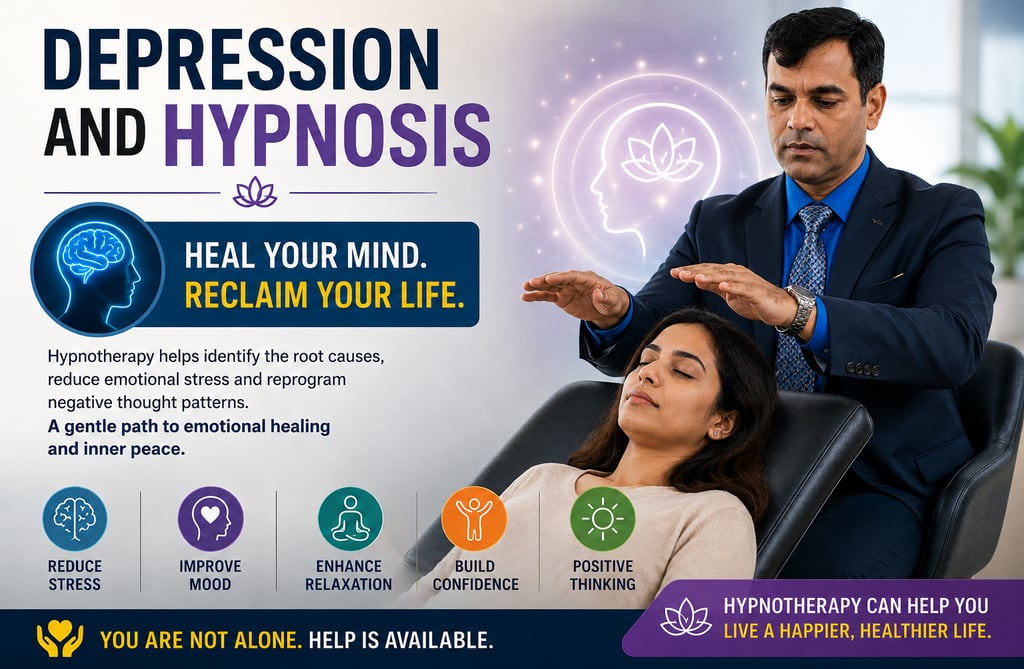
Hypnotherapy is not a cure for depression, but it may be used as a complementary therapy alongside evidence-based treatment when appropriate and delivered by a qualified professional.
Hypnotherapy uses guided relaxation and focused attention to help individuals explore thoughts, emotions, and behaviors that may be contributing to emotional distress.
Potential Benefits of Hypnotherapy
Depending on the individual, hypnotherapy may help support:
Managing Stress
Relaxation techniques used in hypnosis may reduce stress and promote emotional calm.
Building Positive Thinking
Therapeutic suggestions can reinforce healthier perspectives and encourage constructive thinking patterns.
Improving Self-Esteem
Many people with depression experience low self-worth. Hypnotherapy may help strengthen confidence and self-acceptance as part of a broader therapeutic approach.
Better Sleep
Relaxation-focused hypnosis may help improve sleep quality for some individuals, which can positively affect overall well-being.
Reducing Emotional Overwhelm
Hypnotherapy may help individuals develop healthier responses to emotional triggers and daily stressors.
What Happens During a Hypnotherapy Session?
A typical session may include:
1. Initial Consultation
The therapist discusses your concerns, goals, and relevant history.
2. Guided Relaxation
You are guided into a deeply relaxed but aware state.
3. Therapeutic Work
The therapist uses appropriate techniques such as positive suggestions, visualization, or other evidence-informed methods tailored to your goals.
4. Return to Full Awareness
You are gradually guided back to full alertness and discuss the experience if appropriate.
Self-Hypnosis for Relaxation
Self-hypnosis may support relaxation and emotional well-being.
A simple practice:
Sit comfortably.
Close your eyes.
Breathe slowly and deeply.
Relax each part of your body.
Imagine a peaceful place.
Repeat gentle affirmations such as:
"I am calm."
"I am taking one step at a time."
"I can learn healthy ways to cope."
Practice for 10–15 minutes daily if it feels comfortable.
Lifestyle Habits That Support Recovery
Hypnotherapy works best when combined with healthy daily habits, such as:
Regular physical activity
A balanced diet
Consistent sleep routines
Mindfulness or meditation
Spending time with supportive people
Limiting alcohol and recreational drugs
Following your healthcare provider's treatment plan
When Should You Seek Professional Help?
If you experience:
Persistent sadness lasting two weeks or more
Difficulty functioning at work, school, or home
Severe anxiety
Feelings of hopelessness
Thoughts of self-harm or suicide
seek help from a qualified mental health professional as soon as possible.
Hypnotherapy should not replace appropriate medical or psychological treatment for depression.
Frequently Asked Questions (FAQs) – Depression & Hypnotherapy
Q1. What type of professional should I consult for depression and anxiety?
If you are experiencing symptoms of depression or anxiety, it's important to seek help from a qualified mental health professional. Depending on your needs, support may be provided by a psychologist, psychiatrist, counselor, or a certified hypnotherapist. Many people benefit from a collaborative treatment plan that combines different approaches.
Q2. Can hypnotherapy help people with depression?
Hypnotherapy may be used as a complementary approach to help individuals manage stress, negative thinking patterns, emotional challenges, and unhealthy habits associated with depression. It works best as part of a broader treatment plan and should not replace medical or psychological care when those are needed.
Q3. How many hypnotherapy sessions are usually required?
The number of sessions depends on several factors, including the severity of symptoms, personal goals, and individual progress. Some people notice positive changes within a few sessions, while others may benefit from longer-term support. Your therapist can recommend a personalized treatment plan after an initial assessment.
Q4. Is hypnotherapy safe for individuals experiencing depression?
Yes. When provided by a qualified and experienced hypnotherapist, hypnotherapy is generally considered safe for most people. Before beginning therapy, a professional assessment helps determine whether hypnotherapy is appropriate for your specific situation.
Q5. Can hypnotherapy replace antidepressant medication?
No. Hypnotherapy should not be considered a replacement for prescribed medication. If you are taking medication for depression, never stop or change it without first consulting your doctor. Hypnotherapy may be used alongside medical treatment when recommended by your healthcare provider.
Q6. Should I see a psychiatrist if I have depression?
If your symptoms are moderate to severe, persistent, or significantly affect your daily life, consulting a psychiatrist may be appropriate. Psychiatrists can diagnose mental health conditions and prescribe medication when necessary. Many individuals benefit from combining psychiatric care with psychological therapy or counseling.
Q7. What happens during a hypnotherapy session for depression?
A typical session begins with a discussion about your concerns and goals. The therapist then guides you through relaxation techniques and uses evidence-informed therapeutic methods to support emotional well-being, build positive thinking patterns, and strengthen healthy coping strategies.
Q8. Can hypnotherapy help reduce stress and anxiety along with depression?
Many people seek hypnotherapy to improve relaxation, manage stress, and reduce anxiety. Since stress and anxiety often occur alongside depression, addressing these issues may contribute to overall emotional well-being as part of a comprehensive treatment plan.
Q9. How do I know if hypnotherapy is right for me?
The best way to determine whether hypnotherapy is suitable is to schedule an initial consultation with a qualified professional. During the assessment, your therapist will discuss your goals, medical history, and current challenges before recommending an appropriate approach.
Q10. Where can I receive professional hypnotherapy services?
At Milind Sable Academy, we offer professional hypnotherapy sessions focused on personal development, stress management, confidence building, and emotional wellness. If you are experiencing depression or other mental health concerns, we recommend consulting a qualified healthcare or mental health professional to determine the most appropriate treatment plan. Hypnotherapy can be considered as a complementary service when appropriate.
Final Thoughts
Depression is a treatable condition, and seeking help is a sign of strength—not weakness. Recovery often involves a combination of professional care, healthy lifestyle changes, supportive relationships, and, for some individuals, complementary approaches such as hypnotherapy.
If you or someone you know is struggling with symptoms of depression, don't hesitate to reach out to a qualified healthcare or mental health professional. Early support can make a meaningful difference.
About the Author
Milind Sable is a hypnotherapist, NLP trainer, AI trainer, motivational speaker, and author with over 30 years of experience in personal development and professional training. Through books, workshops, and educational programs, he helps individuals develop practical skills for confidence, stress management, emotional well-being, and lifelong learning.
Milind Sable Academy
Clinical mental mechanics and professional hypnotherapy blueprints.
Home-Shop-Results-Contact
Inquiries
info@milindsable.com
Based in Ch. Sambhajinagar, India
Global digital delivery
© 2026 Milind Sable Academy-Professional certification and mental performance blueprints.
Mental mechanics, not mysticism